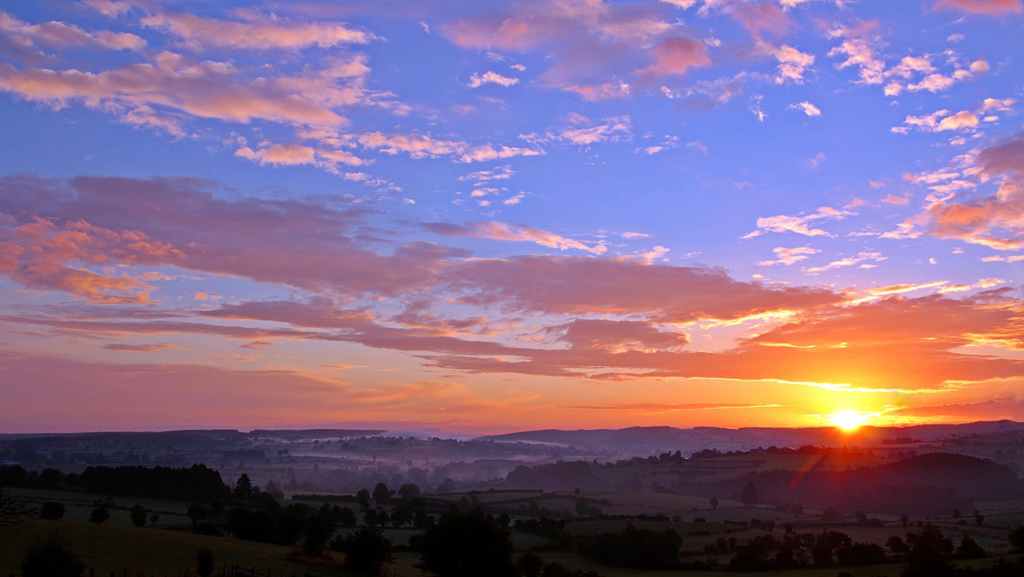
My Desire is here
just beyond my reach
I see it
I sense it
I need it
With each movement toward it, it retreats
Like a wary bird, staying just our of reach
A slow reach toward it, a slow retreat
Thrusting out my arm, a dash away
A violent rushing grasp falls on empty air
Ever fleeing; never leaving.
Always returning, resting tantalizingly close.
I want it; I need it
A siren song I cannot ignore
Yet every move to take it fails
Stymied, I sit
Watching
Waiting
Wondering
Planning my next move
In my quietude, my Desire moves ever closer
Coming to rest on my open, outstretched hand
My chance!
My hand snaps closed
To hold my treasure with an iron grip.
My Desire, as if a vapor
Slips through my closed fist
Soon to perch again
Just beyond my reach
Ever fleeing; never leaving.
Is this a joke; A cosmic tease?
I cannot have what I most need?
Shouting into the emptiness:
"Why am I made to desire what I cannot have?"
"Who delights in withholding what my soul yearns for?"
My anger drains me
Emptied of will
Bereft of demands
I sit again with hands outstretched
Toward the unreachable, ungraspable
It draws near again
To rest again in my hands
Exhausted and empty, I do nothing
Sitting with my desire in my hands
But not possessed by me
An idea grows in my mind.
Birthed of desperation
Or planted there by what rests in my hands
I draw my hands slowly to my chest
Embracing my desire
It does not flee
Like a snowflake falling on water
It melts into me
It is gone
But it remains
It flows into me
It makes its home in me
Food for my soul
Water of life
I hunger and thirst no more
At peace
No desire to grasp or hold
No need to possess
I am complete
I do not want
Grace
It cannot be taken, only given
It cannot be earned, only received
Becoming empty, I am filled
Surrender is victory
Category: General
-

Pursuing Grace
-

The 23rd Psalm for the Anxious Life
Anxiety seems to be an inescapable fact of our times. The vast amount of information available, carefully curated by algorithms to keep us engaged and coming back for more, seems destined to drive up our anxiety. Nearly everything is hyperbolic. Death, destruction, danger, and peril are presented as always just around the corner.
Surely we do live in fraught times. We have deep and seemingly unbridgeable chasms in our society. Politics, race, gender, and religion all seem to be pulling us apart. It is no wonder we are anxious. As real as our perils are, we amplify them in our social networks, adding to our anxiety. We are anything but peaceful, yet Jesus promised his followers peace:
Peace I leave with you; my peace I give to you. Not as the world gives do I give to you. Let not your hearts be troubled, neither let them be afraid.
John 14:27 ESVYears ago, inspired by a talk from Alan Fadling, I was inspired to write a “version” of the 23rd Psalm, for the hurried life. Recently, I attended another workshop with Alan, this time on living an un-anxious life. Unexpectedly, I found myself drawn again to the 23rd Psalm, this time to adapt it for the anxious life.
The 23rd Psalm for the Anxious Life
Anxiety is my shepherd,
I shall have no peace.
It makes me distrust green meadows.
It worries me beside still waters.
It erodes my soul.
It leads me in paths of destruction for no purpose.Even though I walk in the presence of God, I will fear every evil, forgetting he is with me; his rod and his staff fill me with dread.
Anxiety feeds me a forecast of disasters that delights my enemies.
It churns my mind with fear; worry overflows my life.Surely panic and brittleness will follow me all the days of my life and I will dwell in the chaos of my mind forever.
Anxiety is a part of our nature; it can serve us well. But when we find anxiety mastering us instead of serving us, we shouldn’t passively accept that. It is not God’s design for us to be mastered by anxiety. As one who lives with anxiety, I can attest that there is no silver bullet. Medication and therapy are both valuable tools.
Practicing the presence of God is another valuable tool. It can be as simple as reminding our souls of the truth of the real 23rd Psalm, “The LORD is my shepherd; there is nothing I lack” (Psalms 23:1 HSCB). Our shepherd is the wisest, most competent, and caring shepherd. Reminding ourselves of that truth regularly can be a powerful tool in our anti-anxiety toolbox.
-

Rethinking The Law: Courtroom or Classroom?
When you read “Law and Gospel,” what comes to your mind? In my initial formation, I learned that Law and the Gospel were connected in a quasi-symbiotic relationship. The Law was there to convict us. It laid out the impossibly high standard for righteousness, a standard we could never meet. Its ultimate purpose was to show us our wretchedness and our need for a savior. The Gospel was the other side of the same coin. We were in line for eternal punishment due to our transgressions, but the good news of the Gospel was that Jesus paid the price for us, wiping the slate clean.
I didn’t think about this much; I just accepted it as dogma. The few times I thought about the Law/Gospel dynamic, some things didn’t line up for me. Jesus saves us from the burden of the Law, but he seemed to be laying down a whole bunch of new laws: “You have heard it said…but I say to you….” If his atoning death and resurrection saved me from the law, what is the point of more law? Then we get to Paul and another raft of rules for us to follow.
I also wondered what Jesus meant when he said that he didn’t come to abolish the Law but to fulfill it. And why should I care about him fulfilling the law if he was about to render the whole question moot, and I would be let off the hook if I believed the right things and had “enough” faith?
“Blessed is the man
who walks not in the counsel of the wicked,
nor stands in the way of sinners,
nor sits in the seat of scoffers;
but his delight is in the law of the LORD,
and on his law he meditates day and night.”Psalms 1:1-2 (ESV)
What do we make of the sentiment in Psalm 1, that we are blessed when we delight in the law and meditate on it day and night? When we in the West think about law, our minds almost always go to crime and punishment. Laws tell me what I must not do or not fail to do if I want to avoid punishment. Law, while often needed to maintain order, is coercive. We follow it not necessarily because we think it is good but because we fear punishment.
The Hebrew word torah is rendered “law” in the ESV, but it can also be rendered “instruction.” The Expositor’s Bible Commentary reminds us that torah (the law) primarily signifies instruction from God. It is an expression of revelation, not regulation and religion.[1] If we can shake off our fixation on law being what we must do to avoid punishment and instead see it as instruction, it indeed becomes a lamp for our feet and a light for our path.[2]
The difference between a legal mindset and an instruction mindset turns out to be an important one that can ultimately influence the kind of people we become. As we read scripture, we “hear” it through a lens that reflects our mindset. Is God “laying down the law,” or is he showing us how to stay on the path that leads to him?
As a simple experiment, consider Jesus’ telling his disciples, “Judge not, and you will not be judged.”[3] What is your natural inclination when you read that? Is Jesus giving a “law,” saying if you judge others, I will judge you? Or, is he giving wise instruction for kingdom life, telling us not to judge because it is bad for those we judge and bad for us. judging is condemning and condemning hurts those we judge. They are likely to hurt us back, so it is just a bad idea all the way around.[4]
Once you shift from the legal mindset to the instruction mindset, you will start reading much of both the Old and New Testaments with new eyes. And that reading will drive how you think about God. Is he a God who mainly wants us to know how wretched and hopeless we are? Is he petty and vindictive? Is that a God whose nature is love? On the other hand, a God who gives us guidance and instruction is a God who loves and cares for us. He is a God who wants the best for us, even when we don’t know what is good for us.
Our conception of God will, of course, influence our relationship with him. The judicial God pushes us toward self-reliance. We are driven to measure up, make the mark, and, hopefully, avoid punishment. We fall into an adversarial relationship – us vs. God. He imposes the law on us, and we had better follow it. At the end of that road, we find a transactional system where we try to make God accept and love us by obeying his Law, or at least trying really hard. The God who gives instruction out of a loving heart invites us to become reliant on him, knowing that he cares for us and wants the best for us. We do not try to earn our way into his heart; we are already there.
Finally, how we think about God and our relationship with him predicts what we will become; we become like the God we worship. If we worship a judgmental, condemning God whose focus is enforcing his standards on us, we become like that God: angry, judgmental, and eager to impose our standards on others. We become incapable of following one of Jesus’ few direct commandments, that we love each other.[5] When we worship a God who instructs us out of his love and care for us, we become like him: caring, compassionate, and letting love be the master in our relationships with others.
When you read about “the Law” in scripture are you being summoned to a courtroom or invited to a classroom? If we are focused on law we try to moderate our behavior in a vain attempt to measure up, or, worse, to try control God in some weird quid quo pro where we can put him in our debt. We keep God at arm’s length, managing our own lives as best we can.
When we realize we are in God’s classroom, we embrace our union with God; we look to the Lord of life, who saves and heals us. We follow him and his instructions for living in his kingdom and gaining the life he intends for us.
Jesus came to save, not to condemn. He really isn’t looking for better-behaved sinners. He came so that we can have life and have it to the full.[6]
[1] Expositor’s Bible Commentary, vol 5, p 54
[2] Psalm 119:105
[3] Luke 6:37
[4] I borrowed this interpretation from Dallas Willard’s excellent, “The Divine Conspiracy.”
[5] John 13:34-35
[6] John 10:10

-

Good Friday Reflection
Walking into pain.
Accepting humiliation.
Entering the darkest of dark nights.
Betrayed.
Forsaken.
Abandoned.
Righteousness submitting to injustice.
Brutal torture borne that we might know Love.
Love that washes feet.
Love that heals.
Love that weeps.
Love that is merciful.
Love that forgives.
Love that redeems.
Love that dies.
Dying that we may serve.
Dying that we may heal.
Dying that we may know joy.
Dying that we may show mercy.
Dying that we may forgive.
Dying that we may love.
Dying that we may be one with you.
Never forsaken.
Never abandoned. -

Sunrise
One:
It is so very dark. I know that you’ve been out in the light. Can you tell me about the light? What is it like when the sun rises?
Two:
We’ve talked before about the light and the breaking of dawn; I don’t think there is much I can tell you that you haven’t heard before. You really need to experience it. If you’d like to come and walk in the desert and experience the sunrise, I am happy to accompany you.
One:
I’m not really comfortable going out in the dark; it doesn’t seem like I would be safe. Can’t you go out and wait for the dawn, and when it is fully light, come and get me?
Two:
I wish I could, but one cannot jump from the dark to the light here. You have to go through the transition from darkness to light. I know the dark is frightening. Almost everyone is more or less scared of the dark. But we will go slowly, and I will be with you. I’ve walked with many as they move from darkness to light. You may be uncomfortable, but you will be okay!
Two:
I am glad that you have decided to brave the dark so that you can walk in the light. Now that we are here tell me: how are you doing?
One:
I am afraid to move. What if we step off the path?
Two:
We don’t need to hurry; we will go as slowly as you would like. Be still for a moment. What do you notice?
One:
I think I hear things out in the darkness. I am a little scared. What is it I am hearing?
Two:
Could it be the sound of the world waking up? It might be rabbits and squirrels venturing out for the day, or you might hear birds stirring in their nests while they wait for the light.
One:
Yes! Yes! That is what I am hearing!
Two:
That means that we are on the right track; dawn is coming. Can you hear those sounds as heralds of something coming and not something to fear? As you do that, pay attention to what your other senses tell you.
One:
Hmmm. I think that maybe it is starting to get a little bit lighter?
Two:
Is it? Can you see any further ahead than you could? How does the sky seem to you?
One:
Oh. Yes, I can definitely see more than I could before. The shadows are not as deep and dark as they were; I can make out the shapes of trees and bushes quite clearly now. And yes, the sky is a bit lighter. Instead of black, I see a deep blue, and at the horizon, I think I see a bit of gray.
Two:
It sounds like you are starting to see light. When you are ready, let me know, and we will move on.
Two:
We’ve been walking a bit now. Let’s rest here. What are you noticing now?
One:
Wow, the clouds! Before, the clouds were grey, but now they are tinged with colors.
Two:
Can you tell me more about the colors? How do they make you feel?
One:
They are soft pastels: pink, orange, and purple. I think I see blues and yellows as well. It is hard to say I they make me feel. Happy, maybe, but more than that. I think I am feeling a sense of peace.
Two:
Why don’t we just sit and watch for a few minutes? I wonder what happens next.
One:
That seems silly; I just told you what I am seeing!
Oh…Wait! I do see something happening; the colors in the clouds are changing. Even as I am watching, they are becoming more intense and brighter. There is hardly any gray in the clouds anymore. This is amazing!
Two:
It is wonderful, isn’t it, how the light brings so much color and beauty. I am glad that you are noticing it. Take a minute and look around. What does the sky behind us look like? What do you see in the landscape now?
One:
I can’t believe this: the colors are in the sky behind us. Even where there are no clouds, the sky is purple and pink. And I am starting to see the colors of the plants around us as well. I can see yellow and red flowers and shades of green in the foliage. And the shadows are almost gone. Now I can see birds and rabbits scurrying in the underbrush. That must be what I was hearing before.
Two:
As we move from the dark to the light, it is important to look around ourselves frequently. You’ll see lots of unexpected things! The sun is almost up now. It may be tempting to stay here, but let’s go on up to the top of the hill, shall we?
Two:
Well, here we are at the top. I wonder if we are close to the sunrise.
One:
I’ve already seen a lot that I never expected. If I am honest, I am feeling a bit disappointed now. The beautiful colors are fading. The sky looks more blue, but the lovely colors are almost gone from the clouds.
Two:
I see what you mean. It can be hard to let go of something, like the parti-colored clouds; especially if we don’t know what is coming next. We can’t really hold on to what was. Let’s rest and see what is next.
One:
I really like the beautifully painted clouds. Why do they have to fade?
Two:
It is in their nature to fade. They herald the sunrise, but they are not the sunrise. The sun cannot rise without whitewashing the clouds. But if you are willing to press into what is next, I think you will be glad you did.
One:
I think I see something new. It looks like there is a line of bright gold on the horizon. It looks like the sky is on fire! It is getting hard to look at. Is that the sun?
Two:
Not yet, but soon. Look around you again. What do you see? What do you notice?
One:
I see so much more detail now. The colors I thought were bright before are really bright now; they are vibrant. Even the shadows are brighter. They are still there, but they don’t hide anything anymore. They are no longer shadows; now, they are shades.
Two:
Look to the east again.
One:
I see it! I see the sun rising! I can’t really look at it; it is too bright. It is incredible, each moment more of it is revealed. I am feeling its warmth, too. It feels like everything that was dark or asleep has come to life.
Two:
I am glad you were able to experience the sunrise. Now it is time for us to go back down the hill, back home.
One:
I know we are not going back into the darkness, but it will get dark again, won’t it?
Two:
Yes. It will get dark again. And the sun will rise again. It will be a while before it is dark again. For now, enjoy the warmth of the sun and the brightness and newness of the world around you.
Now that you have seen the sunrise, do you think you will experience the darkness differently?
One:
I think so. I hope so. I want to. I will remember the sunrise.
Will it be just like this the next time it rises?
Two:
No. Each sunrise is different. Sometimes, there is almost no color in the sky; other times, the sky is completely filled with impossibly vivid reds and oranges. But remember: the “show” is just the preamble, the herald of the coming sun. You may rightly delight in seeing it, but the sun is what warms us and feeds our souls.
One:
I like that. Knowing the sun will rise again will help me bear the darkness. -

Thinking About Repentance
Thinking about repentance seems natural during Lent. In liturgical traditions, the Lenten season is forty days preceding Easter. It commemorates Jesus’ forty-day fast in the wilderness before he began his public. It is a time of reflection and introspection. A discipline of self-denial during Lent can drive our introspection as we learn just how weak our wills really are.
As we come to grip with the weakness of our wills, our thoughts often turn to repentance. Jesus begins his ministry by declaring: “Repent, for the kingdom of God is at hand.” How do you hear that declaration? We may hear it as a veiled threat: “You better shape up and fly right because God is coming. You don’t want him to be mad at you.” I heard it that way for many years. But perhaps, rather than imagining Jesus scolding us, we could hear him offering us an invitation: “God is doing something great; his kingdom is here! Pay attention so you don’t miss out!”
Our common understanding is that repentance means being sorry for our sins and determining to “do better.” That fits the mindset of hearing “repent!” as a warning. Here our experience of repentance can be embarrassingly bad. We find ourselves repenting over and over and over again, often repenting of the same sin. Or, if we manage to get a particular sin “under control,” we find that five more have popped up to take its place.
A perpetual struggle to make ourselves better cannot be all God has in mind for us. In Mark’s Gospel, Jesus is confronted by the religious leaders about his disciple’s lack of adherence to ritual practices. In Jesus’ response, he tells us that it is what comes from inside us that defiles us (Mark 17:18-23). Our outward behavior, while it may be quite awful, flows out of an inner, corrupted heart. To stop the sinful behavior, we need to address our inner life.
When we look at the language used in the New Testament for “repent” or “repentance,” we see that it means something much deeper. It means turning around and heading in a new direction. It means taking a higher mind or a new decision. This understanding of repentance points us back to addressing our inner life. In his book “A Long Obedience in the Same Direction,” Eugene Peterson put it like this:
“Repentance is not an emotion. It is not feeling sorry for your sin. It is a decision. It is deciding that you have been wrong in supposing that you could manage your own life and be your own god;”
Peterson, Eugene. A Long Obedience in the Same Direction. 2nd ed., Intervarsity, 2000. p. 23.This understanding aligns with Jesus’ teaching in Mark’s gospel. It also aligns with the message of scripture from Genesis to Revelation. The root of our problem is our surrender to our sinful natures (Gal. 5:19); God wants us to be cured and remade from the inside out:
- He will write his law on our hearts. (Jer 31-33-34)
- He delights in truth in our inward being (Ps 51:6)
- He tells us to take up our crosses daily, denying our sinful natures so that we are not enslaved to sin. (Lk 9:23, Rom 6:6)
Jesus does not want you to have a life that looks okay, even though it is not; he wants you to have a great life, a better life than you can imagine. He wants to give us new life, kingdom life; not our old life with the ugly parts better managed. He wants you to take up your cross and let go of your life as you have been trying to manage it.
On Ash Wednesday, we are reminded: “From dust you came, and to dust you shall return.” We are created and sustained by God; We depend on him utterly. We really do need to get over ourselves. We are not God; our desire to be God is THE sin that leads us into all sin.
The root of our problem is that we are rebels, and God is not looking for better-behaved rebels; We are called to surrender to the loving God who stands waiting for us, wanting to give us the best life possible.
Now we can see the call, “Repent, for the kingdom of God is at hand,” not as a warning of impending doom but as a grace-filled invitation to lay down our rebel arms in favor of the loving arms of the Father.
-

Swimming
The Lake is immense, deep, and still. I cannot guess its size or its depth. I am drawn to it; I desire to somehow be “with” the Lake and be as close to it as possible. Initially, I get only as far as the shore; I am content with being near the Lake. I see its shimmering surface. I hear the gentle sound of waves lapping up against the shore. I smell its watery scents. My desire is not satisfied, but I am not ready to get any closer.
I want more. I take a boat and experience the Lake, albeit indirectly. I experience buoyancy and the unsteadiness of the boat on the water. The air is different out on the Lake; it is more still yet alive with things unseen. I strain my ears, trying to hear whispers of invitation that seem to be around me. Leaning over the gunnels, I peer into the depths of the Lake. They are at once clearer and more mysterious. I am closer to the water but still apart from it. I will not lean over far, lest I fall in and am lost in it. Neither will I row out too far from shore, fearful of losing the way back. I row back to shore.
The more time I spend near the water and on the water, the more I want to be in the water. I wade into the water, experiencing contact with it and feeling its wetness. I feel the gentle tug of eddies and currents around my legs. Not content with wading, I try my hand at swimming: I go fully into the water. The water surrounds and upholds me. I dive down, wanting to be as fully in the Lake as possible. It is exhilarating, but soon, I must come up for air. I cannot swim for very long; my limbs tire, and I must return to the shore. My time swimming leaves me wanting an even closer communion with the Lake.
I return to the water time and time again. Then, all at once, I notice a remarkable transformation has taken place. Somehow, I have become liquid. I do not know when or how it happened, but where I was once flesh and bone, I am now liquid. I have not lost my shape; I still have arms and legs and hands and feet. My body and my face are still “mine,” but now they are liquid.
Entering the water, I join with it; I become of the same substance. The Lake is not a place I visit; it is my home. I become one with the water, yet I am not dispersed or diffused – I do not lose my identity. In my liquid state, I am never chilled or tired; I never need a rest. I am still “me,” and I am also part of the Lake.
I can dive below the surface and never need to come up for air. I move naturally and easily with the flows and currents in the depths of the Lake. I can exercise my “self-ness” and go against the currents, but the more I am “liquid,” the less I find that appealing. If I chose to, I could return to the land as a solid creature, to only look upon the Lake, apart from it, no matter how close I got to it, but why would I?
This work, “Swimming,” by David Hammerslag, is licensed under CC BY-NC-ND 4.0. To view a copy of this license, visit http://creativecommons.org/licenses/by-nc-nd/4.0/
-
The Wagon
I journey each day on a horse-drawn wagon. It is a fine wagon, and I do all I can to ensure that I will go smoothly to my destination. I pack the wheel bearings with grease. The horses are well-shod and seem to be well-suited to their task. Their harnesses and traces are all in good order. I review my map and carefully plan my route.
Yet, each day ends the same. I start off sure of my driving and my direction. No matter how diligently I apply myself to driving the team and following my route, I always end my day in a ditch or discovering that I am badly off my course, or both. It makes no sense. I am doing everything I can and I am getting no closer to my destination.
One evening, as I sat in my frustration, a man appeared and offered to trade his horses for mine. I was suspicious of his offer; his horses did not appear to be at all tame or suited for harness.
He was frank. His horses are not tame, and they will have their own heads. Yet he insists that his horses will stay on the road I must be on and take me to where I should be going.
Unsure of this offer, I tried a mixed team: some of his horses and some of mine. Two calm, tame, if ineffectual, horses paired with two determined, not-quite-tame horses resulted in disaster. I could not drive at all and nearly lost my wagon in the chaos. I spent the next day repairing my wagon and the night considering my options.
With the dawn came clarity of thought. The way I had been going was getting me precisely nowhere. What did I have to lose? I took the offer, giving up my horses and harnessing his to my wagon. I am still doing the driving. I am still in the same wagon. But I find that the horses seem to know the way. They do not grow more “tame.” Some days, their wildness causes me to let the reins go slack, close my eyes, and hold on to the bench for dear life. They take my driving, no matter how inattentive or timid, and translate it into the direction that draws me ever nearer to where I was meant to be going.
Where I was meant to be going; that is the really odd thing. The further I journey with the new team, the more I realize that I am not going where I thought I should be going — I am going where I am meant to be. I do not know where that is, but with each day the countryside improves and the way becomes easier. I pass through lush green meadows and cross gentle streams easily. I do not know where, exactly, I am going, but I know it will be good.
-

Is Discernment Hard or Easy?
I have started reading a new book on discernment. I am only a little way into the book, but it raises a question in my mind: “Is discernment easy or hard?” Before we talk about the ease or difficulty of discernment, we should be clear about what we mean by “discernment.” For me, a good operational definition is “being aware of God’s activity in our daily lives and being aware of his desire for us and how he may desire us to act, in matters large and small.”
Discernment shouldn’t be hard. The model of God’s interactions with us, as seen Eden, is one of regular, easy presence and conversation. Genesis tells us that God would walk in the garden in the cool of the evening; Adam and Even had to go out of the way and hide to avoid encountering God! Just before his crucifixion, Jesus reassured his followers that they would not be left alone:
But when the Father sends the Advocate as my representative—that is, the Holy Spirit—he will teach you everything and will remind you of everything I have told you. … When the Spirit of truth comes, he will guide you into all truth. He will not speak on his own but will tell you what he has heard. He will tell you about the future. 14 He will bring me glory by telling you whatever he receives from me. 15 All that belongs to the Father is mine; this is why I said, ‘The Spirit will tell you whatever he receives from me.’
John 14:26, 16:13-15 (NLT)Through the ministry of the Holy Spirit, God will continue to teach, convict, and encourage us, guiding us into all truth.
Hearing God and being aware of his actions and desires in our lives should be easy and natural for us. Yet for most of us, this is not the case. Two factors make discernment much harder than it should be: We don’t really expect that God will be present to us and we fill our minds and environments with so much “noise” and other voices that we effectively drown out God’s voice.
To the first point, even when we can convince ourselves that God can we present to us, we still function as if he won’t show up in my life! We set up a bit of chicken-and-egg problem for ourselves. We don’t expect to hear God, so we aren’t likely to be paying attention and really trying to hear. Not listening, we will not hear, and that reinforces our idea that God will not be present to us. The more we don’t expect, the more we don’t pay attention; the less attentive we are, the less we discern.
Here is a challenge. Set aside time each day to just listen. Begin with prayer, perhaps confessing your doubts that God will “show up” and inviting his presence. Then just be still and listen. This can be enormously hard for many people; start small. Five minutes is a good starting place. Set aside your doubts and spend five minutes being present to God and allowing him to be present to you.
As to the noise and distractions we surround ourselves with: come back in few days for “part 2!”
This work is licensed under a Creative Commons Attribution-NonCommercial-NoDerivatives 4.0 International License.